|
|
|
|
|
|
|
|
|
|
|
|
|
|
|
|
|
|
This issue of ADEC Connects includes:
- A report from our President Peggy Whiting
- A report from Annual Conference Committee Chair Fay Green
- Articles written by ADEC members to celebrate April as Global Volunteer Month
- A brief summary of activities of the Professional Development Committee
- Regular Featured Member Profile, Student Profile, What's New: New Books from ADEC Members, and Members Corner.
Enjoy reading these and other interesting tidbits that help our Association connect together!
|
|
|
|
|
|
|
|
|
|
|
|
|
|
|
|
|
|
|
|
|
|
|
|
|
|
|
I have been so privileged to witness the collective dedication, expertise, and sacrificial willingness of so many who work as our ambassadors. It is fitting that the timing of our conference is also a celebration of global volunteer month. Behind any ADEC success are servants who execute our mission and annual priorities. Countless unseen individual and group hours are given in creative and detailed attention to accomplish the next right thing. If a leap forward does materialize, it is preceded by the “in the trenches” work that culminates into something realized.
|
|
|
|
|
|
|
|
|
|
|
|
|
|
|
|
|
Our ADEC heroes are all the volunteers who gift to us their time, talents, and tenacity to focus first on the WHY, then on the WHAT, and lastly on the HOW. I applaud the tireless generosity of all of you who have brought things into fruition this past year. Our volunteers have served in a myriad of ways: as Board advisers and leaders; as committee chairs and members; as task force participants; as voices to deliver keynotes, thematic panels, webinars, and conference posters; as authors and editors for ADEC publications; as networkers who outreach, welcome, engage, and orient us; as financial overseers; as creative visionaries; as event planners; as credentialing managers; as students; as teachers and mentors; as those who bridge what has been with what is to come; and as partners, sponsors, and benefactors.
ADEC’s WHY is our vision of “a world in which dying, death, and bereavement are recognized as fundamental and significant aspects of the human experience…a home for professionals from diverse backgrounds to advance the body of knowledge.” ADEC’s WHAT is our mission in “promoting excellence and recognizing diversity in death education, care of the dying, grief counseling and research in thanatology.” ADEC’s HOW is stated as “the Association provides information, support and resources to its international, multicultural, multidisciplinary membership and to the public.”
This has been another challenging year for each of us individually and for our Association. Our response to things outside our control has been stretched outside any reasonable limit. Our resilience has been tested and taxed. Our stamina has been fatigued. As we know in our thanatology practice, living within extended ambiguity carries these burdens. We have asked questions such as these:
- Can we return to some semblance of a safe in person conference?
- What will travel restrictions look like? How do we offer virtual connection to stay engaged and outreach?
- How do we renegotiate hotel contracts signed pre pandemic in a different assumptive world?
- How do we weather realities of unexpected expenditures and needs?
- How do we strengthen our revenue streams?
- How do we cross collaborate internally and communicate externally?
- How do we move toward our long standing desire for self-management?
- How do we accelerate our presence even in times of isolation?
- How can we speak into the convergence of global needs and ADEC’s message and expertise?
These powerful questions give us a compass and a structure to navigate, prioritize, evaluate, change direction, and learn. We have answered with collective strength and creativity to keep going the course, to renew our spirit, and to move forward in alignment with our vision and mission. I have been reflecting upon Dr. Gene Knott’s work with ADEC in “appreciative inquiry.” In 2013, Dr. Knott assisted ADEC leaders in this method to develop our strategic plan. I encourage you to re-read this plan found on our ADEC website. Our work this year for envisioning our future is parallel to this adopted strategic plan. Here are some highlights of the 2021-2022 year.
- We self-published the 3rd edition of the Handbook of Thanatology with 56 authors from 14 countries and 6 continents. This resource utilizes the revised Body of Knowledge to include death and non death losses and is adopted by our Credentialing Council as a reference for the 2023 certification examination. Proposals for alternate delivery have been researched.
- We delivered our first hybrid conference. Our professional development courses and specialty workshops were delivered virtually before and after the conference itself so that attendees could feasibly participate in all programming.
- We made available a Professional Learning Library composed of 25 presentations from the 2021 ADEC virtual conference without charge to our members.
- We delivered our 2nd half-day Fall virtual workshop entitled, ADEC Connections: Building Bridges Through Loss, offering 3 international panel discussions and a mid year presidential report.
- We navigated a special vice president mid year election. Membership voted for a bylaw change enabling the immediate past president to serve on the Board for the continuity of leadership succession.
- We strengthened our infrastructure committee communication through monthly meetings with leadership to cross collaborate, to assess needs, and to increase accountability toward ADEC priorities.
- We held virtual and in person member orientations and first time conference attendee gatherings and recruited using a presidential outreach. We implemented ADEC Bridges, monthly zoom global networking sessions spanning 8 countries, 4 continents, and 9 time zones. Membership now includes 35 countries and 6 continents.
- We hosted diversity and inclusion activities including panel discussions, a conference luncheon, and a ritual board displaying diverse expressions of COVID losses.
- We utilized thematic quarterly professional development content targeting physicians, the health community, and an international audience. We delivered a special webinar series entitled Physicians’ Perspectives on Palliative Care & End of Life.
- We launched ADEC aCcredited Education (ACE) to replace our previous preapproval program.
- We delivered thematic Connects issues with social media driving traffic to articles and member profiles. We increased our reach, engagement, and membership through revitalization of LinkedIn and Facebook. We audited our website as the precursor to future redesign.
- We began our Legacy Project to learn from ADEC’s rich heritage to connect past, present, and future.
- We streamlined and digitalized our credentialing process.
- We included virtual wellness times during our conference.
- We voted to make a progressive transition toward self-management as of July 31, 2022.
Our ADEC volunteers did this work and we can feel proud of these steps during ambiguous and changing circumstances. As we move into leadership under Andy Ho and Melanie Wright, we will continue to walk toward the light of opportunity for a widening, deepening, and instrumental future. I pledge my partnership.
In my opening conference remarks, I referenced Van Morrison’s song, The Bright Side of the Road, as they represent our values and identity:
“Into this life we’re born, sometimes we don’t know why. And time seems to go by so fast, in the twinkling of an eye. Let’s enjoy it while we can, let’s enjoy it while we can. Won’t you help me share my load. From the dark end of the street to the bright side of the road.”
My gratitude for the servants who made this a bright year. Your perseverance, care, contribution, and wisdom made all the difference!
|
|
|
|
|
|
|
|
|
|
|
|
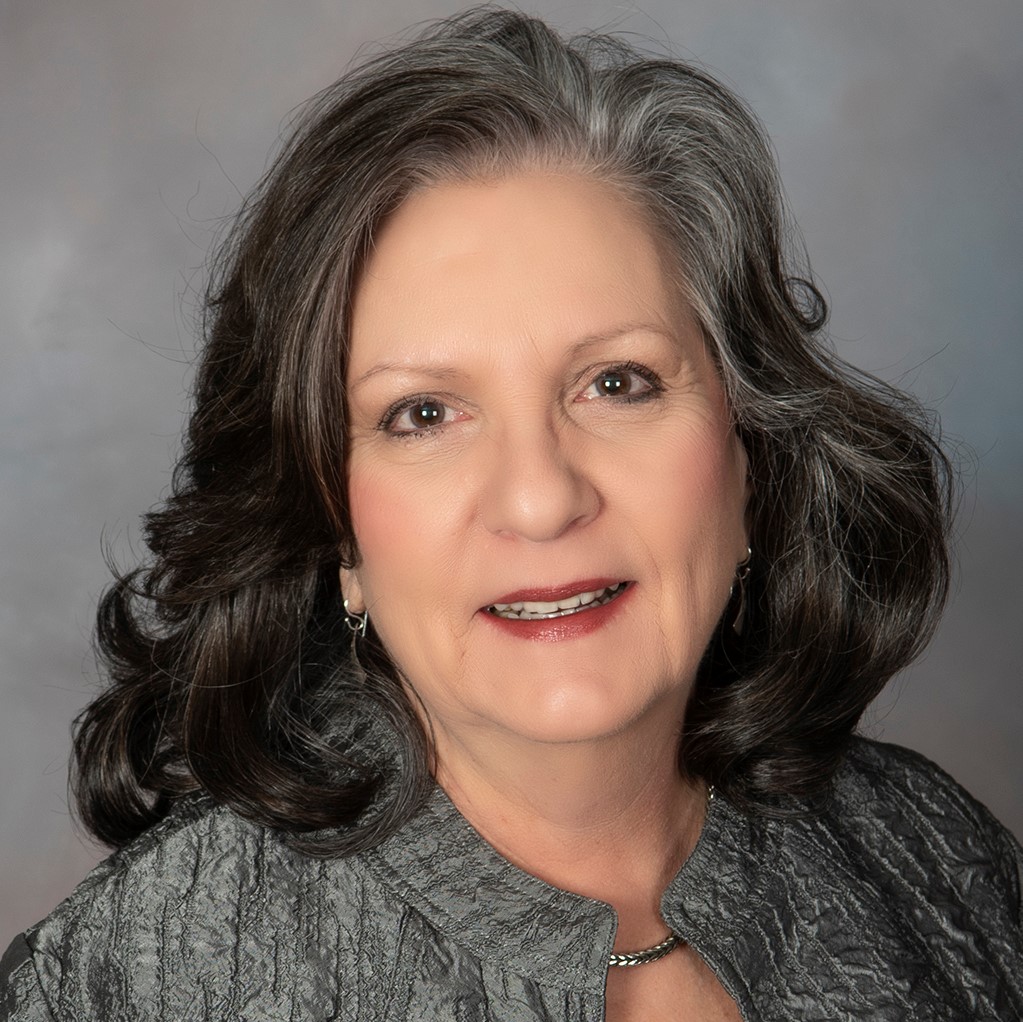
Peggy Whiting
ADEC President
|
|
|
|
|
|
|
|
|
|
|
|
|
|
43rd Annual Conference Report
|
|
|
|
|
|
|
|
|
|
By Fay Green, LPC, LMFT, NBCC, FT
ADEC Conference Planning Committee Chair
|
|
|
|
|
|
|
|
|
|
|
|
|
|
|
|
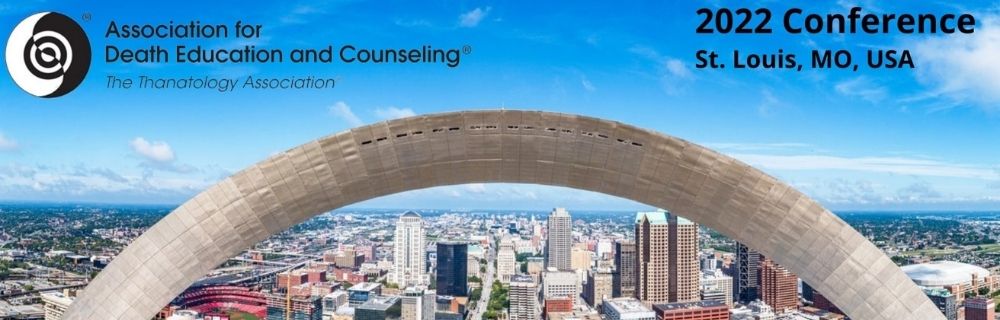
ADEC’s 43rd Annual Conference held at the Marriott St. Louis Grand Hotel in
St. Louis, Missouri was a TREMENDOUS success – our first hybrid conference. There were 444 individuals attending in person or virtually who had an opportunity to choose from fifty two concurrent sessions and who can also view additional content until May 31, 2022. The content of the three outstanding Keynote Speakers in the plenary sessions was just what we needed after being physically apart for three years.
|
|
|
|
|
|
|
|
|
|
|
|
|
|
|
|
|
There were Invited Speakers or Hot Topic concurrent sessions. One of those was a session arranged by the Handbook Task Force with authors from three chapters of our self published Handbook of Thanatology, 3rd Edition. The ADEC Living Legacy Project highlighted thanatology pioneers, diversity and inclusion, students, and the future. A third concurrent session focused on ADEC’s Diversity and Inclusion and challenges for future work. A panel of clinicians, educators/researchers within ADEC gave differing viewpoints during the Discussion on Prolonged Grief Disorder.
Recognizing award recipients is an important part of plenary conference sessions. The 2022 recipients were:
- Community Educator Award – Kelley Grosklags
- Lifetime Achievement Award – Dr. Betty Davies, Dr. Tom Attig
- Research Recognition Award – Dr. Lauren Jennifer Breen
- Edie Stark Shirley Scott Early Career Award – Oindrila Dutta
- Ronald Keith Barrett Diversity and Multicultural Presentation Award – Lisa Connors
- Mary E. Brown Undergraduate Student Paper Award – Madelyn Harris
- Richard Kalish Graduate Student Paper – Jordan Reuter
ADEC and the Conference Planning Committee wish to express appreciation to the Sponsors and Exhibitors for the 43rd Annual ADEC Conference, including:
Sponsors:
- Premiere – TAPS (Tragedy Assistance Program for Survivors)
- Platinum – Edgewood College
- Bronze – What’s Your Grief
- Bronze – Austin Kelley – Supporting Hope & Meaning
Exhibitors:
- Edgewood College
- Hospice Foundation of America
- Marian University
- National Cemetery Administration
- Research Press
- Shared Crossing Project
- Share - Pregnancy and Infant Loss
- TAPS
The 44th ADEC Annual Conference will be held at the Hyatt Regency Hotel, Columbus, Ohio, April 25-29, 2023. Make plans to attend this conference!
|
|
|
|
|
|
|
|
|
|
|
|
Congratulations to our 2022 Scholarship Winners!
|
|
|
|
|
|
|
|
|
|
|
|
|
|
Shaik Amin
Yvonne Chung
Jill Dombroski
Nathalie-Roze Fischer
|
|
|
|
|
|
|
|
|
|
|
Carla Harvey
Tilly Stevens
Kelsey Villanueva
Alison Westerink
|
|
|
|
|
|
|
|
|
|
|
|
|
|
|
|
|
|
|
Celebrating Volunteers For April's Global Volunteer Month
In celebration of Global Volunteer Month, ADEC members have shared their thoughts on volunteering.
|
|
|
|
|
|
|
|
|
|
|
|
|
|
|
|
Leading a Nonprofit Organization Dealing with Death-Related Issues
By John Abraham, MDiv, FT
I volunteer with a board of directors, also all volunteers, leading a nonprofit organization dealing with death-related issues. We have about 500 households who are interested in what we do and attend our programs/events/classes.
Among other things, we conduct what we call Small Group Social Gatherings wherein we invite about 30 people, ask them to bring some finger food, and discuss all sorts of death and dying concerns.
|
|
|
|
|
|
|
|
|
|
|
|
|
|
|
|
|
We might do an “icebreaker” or two such as: in 60-90 seconds tell us about your hometown. We break into small groups of 4-5 in each, provide a list of topics they may want to discuss, and also invite them to talk about anything death related.
After about 30 minutes the group reports to everyone anything they deem noteworthy from their talking, then we take a break and load our plates with food, and do the process again, with participants remaining in their group or forming new groups. Such discussions have been very well received.
This exercise provides a safe, friendly, comfortable environment for people to meet likeminded others and discuss an otherwise taboo topic – death.
We also conduct workshops on preparing advance directives and how to make them work for you, including having an attorney present who can help participants fill out the forms, answer questions, and provide guidance. We emphasize the importance of having someone designated as healthcare Power of Attorney.
Another program is called “The Impact of a Good Death.” The way most of us in this country die is most often pretty bad. We have survivors tell their stories about losing a loved one, whether that person died well, or badly, how they coped, talking about their bereavement, and how else the death impacted family and friends who survived.
All of this is done a volunteer basis!
|
|
|
|
|
|
|
|
|
|
|
|
|
|
|
|
|
|
ADEC’s Volunteers – A Collective Portrait
By Joy Berger, DMA, FT, BCC, MT-BC
In honor of April’s Global Volunteer Month, we thank and honor ADEC’s many volunteers. You give countless hours of your professional expertise and personal compassion to ensure ADEC’s vision and mission with our members throughout our world. Nearly 75 members serve regularly on Committees, the Credentialing Council, Task Forces, and the Board of Directors. Collectively – based on the U.S. Volunteer Value figures – ADEC’s volunteers provided well over $150,00 of labor cost savings, this year, alone.
|
|
|
|
|
|
|
|
|
|
|
|
|
|
|
|
|
ADEC’s committee structures include our Board of Directors; Membership (with sub committees Diversity & Inclusion, Networking & Engagement); Communications (with Web & Social Media); Conference Planning (with Awards, Exhibitors & Sponsors); Finance (with Fund Development, Living Legacy); Professional Development; Leadership Recruitment & Development; and Students & New Professionals. Occasionally, we have special time limited Task Forces, like our Handbook Task Force and Legacy Project. Additionally, our Credentialing Council autonomously oversees and maintains a valid credentialing process in the field of thanatology, on behalf of ADEC. Examine how these work together at our organizational chart: https://www.adec.org/page/ADECCommittees.
Add to these our conference’s expert presenters (in person, hybrid, and posters), and you begin to grasp our volunteers’ unparalleled expertise.
Professionally, our volunteers span the scope of thanatology services: from hospitals to long term care, hospices, and doulas; from children’s and teens’ schools to universities; from natural deaths to trauma and tragedy; from medical science to spiritual care; from technology to the arts; from funeral homes to grief care healing; from deeply personal soul searching to evidence based research. Continually, what inspires me the most is each member’s life journey that brought them to this thanatology work, and keeps them here with ADEC.
Thank you, ADEC’s Volunteers! We value you. We thank you!
|
|
|
|
|
|
|
|
|
|
|
|
|
|
|
|
|
|
Volunteering: An Act of Heart and DNA
By Kimberlee Bow, MA, LPC, R-DMT, CT, ACS, CFE/T, RSME/T, RYT500
In elementary school, while most kids spent their days in class, I spent my days volunteering in the Reach Room helping with the youth who had identified developmental disabilities. As a young child, I learned how ingrained in the human heart and DNA volunteering truly is for us. Throughout the years, I continued to volunteer, whether it was with the Special Olympics as a coach and unified partner or as a volunteer mental health professional at the VA.
|
|
|
|
|
|
|
|
|
|
|
|
|
|
|
|
|
It came easily and naturally to want to give back to others. I gave of myself to the people I was honored to work with, and in return, the landscape of heart was forever knitted with relationships, memories, and connections. I was several times challenged by people, well intentioned, to be mindful of my self care and that maybe volunteering was more of an energy drain. While that can happen, for me that was not the case. It filled me up and energized me. There was joy abound; even in the tough moments, being in a position to bear witness to someone who needs it and would not have it otherwise is a treasure. To complete the picture, I want to close with one of my special memories. While on the inpatient unit at the VA, I had an all women's group for the day. I was drawing on the use of a ball and movement for the intervention and in the time that we had together we found ourselves laughing so hard that everyone was turning red. I do not think that one normally hears such laughter on the unit but that day the unit was ablaze with deep, authentic laughter. Volunteering is in my DNA, and that is a fact!
|
|
|
|
|
|
|
|
|
|
|
|
|
|
|
|
|
|
Thoughts on Volunteering
By Robin Cowherd, FT (retired)
I retired from fulltime work about six years ago and from a part time position about three years ago. Not long after retiring I volunteered as a Deacon at my church. This volunteer opportunity allowed me to continue to use my knowledge and experience in the grief and loss field to meet with and befriend members of our congregation who are dealing with loss of loved ones, medical diagnoses which led to losses, and aging issues – all of which carry with them grief struggles.
|
|
|
|
|
|
|
|
|
|
|
|
|
|
|
|
|
In addition to my church, I volunteer my time with the Commission on Ministry for the Presbytery of Eastern Virginia. In this role, I serve as the clerk of the Commission responsible for completing the monthly minutes. I serve as the chair of the Commissioned Pastor Subcommittee. I have also volunteered to serve a local church which has experienced extensive trauma and loss from losing pastors. This required me to perform pastoral care (extensive listening and reflective thoughts) concerning members of the congregation that sought counseling during their past months.
In each of these circumstances I was able to use the gifts I have been given to help others. These efforts have provided me the opportunity to continue to use the professional grief and loss experiences and learning opportunities I have developed throughout my career to help people struggling with the pain associated with their losses. Furthermore, the volunteer experiences have given me the personal fulfillment of my passion of serving.
|
|
|
|
|
|
|
|
|
|
|
|
|
|
|
|
|
|
Why I Volunteer for ADEC
By Galen Goben, DMin, CT
I have volunteered for a variety of committees of ADEC since I joined in 2007. Most of that work has been around the conference and making it happen. What is so enjoyable for me is watching people at the conference enjoying themselves, connecting with people, both new friends and long time colleagues, and knowing that I had a (small) part in making that happen.
|
|
|
|
|
|
|
|
|
|
|
|
|
|
|
|
|
The ADEC Conference is vital to what we do and who we are. The learning, the camaraderie, the expansion of our souls through the immensely important service that we provide is key to the vibrancy of the field of thanatology.
To volunteer for ADEC and to help make it a reality is meaningful to me. It makes my heart bigger.
|
|
|
|
|
|
|
|
|
|
|
|
|
|
|
|
|
|
Volunteering in the Valley of the Shadow of Death
By Althea Halchuck, EJD, CT, BCPA
The first modern hospice was established in London in 1967 by Dame Cicely Saunders. Her method was to steadily dispense medication to terminally ill patients to stay ahead of their pain rather than wait for the pain to return. In addition, she offered comfort care, ministering to patients' emotional and spiritual needs and their physical symptoms, thus creating a new approach to helping the dying.
|
|
|
|
|
|
|
|
|
|
|
|
|
|
|
|
|
Although revolutionary at the time, these ideas are central to the hospice philosophy.
Hospice utilizes a team approach, and volunteers are essential as Medicare mandates volunteer use for at least 5 percent of patient care hours. They bring a level of compassion and love that is said to enhance the skills of the rest of the team. To maintain a high quality level, all volunteers must undergo an initial multi week training, criminal background check, and proof of vaccinations. In addition, there are monthly meetings providing education on end of life subjects.
Volunteer roles include companionship, writing letters, running errands, documenting a life history, and reading from a favorite book. It often means holding a hand, providing a warm presence, and sitting vigil at end of life. Some volunteers bring skills such as pet therapy or playing a musical instrument. In my eighteen years, my volunteer activities involved locating estranged loved ones for a final goodbye, arranging burial in a Veteran's National Cemetery for an indigent patient, and donating a patient's player piano to a local theater.
Most volunteers consider it an honor to offer patients and families comfort and closure and feel we gain much more than we give. Advocating for patients through these tasks and others like them makes volunteering so rewarding. We look forward to walking with our patients through their darkest valley, assuring them that they are not alone as they pass from this world to the next.
|
|
|
|
|
|
|
|
|
|
|
|
Virtual “Bridge” Meetings for ADEC Members
|
|
|
|
|
|
|
|
|
|
Join us to informally get to know ADEC members around the world, and to learn from each other as we discuss key topics relevant to our ADEC mission.
|
|
|
|
|
|
|
|
|
|
|
|
|
|
|
|
These gatherings will occur on the second Sunday of the month:
- May 8, 2022
- June 12, 2022
- July 10, 2022
- August 14, 2022
- September 11, 2022
- October 9, 2022
|
|
|
|
|
|
|
|
|
|
|
|
|
|
|
|
|
Find your time zone below and mark it on your calendar! There are two different opportunities to connect based on your location. The information to join remains the same for all meetings in your time zone.
|
|
|
|
|
|
|
|
|
|
|
|
|
|
Asian
Melbourne: 8:00 pm
Singapore: 5:00 pm
London: 10:00 am
|
|
|
|
|
|
|
|
|
|
|
Americas
London: 9:00 pm
New York: 4:00 pm
Vancouver: 1:00 pm
|
|
|
|
|
|
|
|
|
|
|
|
|
|
|
|
|
|
|
|
|
|
|
|
|
ADEC Committees: Professional Development Committee
|
|
|
|
|
|
|
|
|
|
To keep members abreast of what is happening within the ADEC committees, Connects is featuring articles discussing their latest activities.
|
|
|
|
|
|
|
|
|
|
|
|
|
|
|
|
Committee Chair
Melanie Wright, MSW, FT
|
|
|
|
|
|
|
|
|
|
|
The Professional Development Committee is honored to continue providing our ADEC membership with ongoing educational opportunities and a variety of perspectives in the field of death, dying and bereavement. Our monthly webinars are specifically selected and designed to meet the needs of not only our members, but also increase our reach as an international organization, in such a dynamic landscape.
The year of 2021 was centered on quarterly thematic topics, which resulted in a variety of rich content. We were successful in our vision to serve the physician community, with the fourth quarter series: “Physicians’ Perspectives on Palliative Care and End-of-Life.” This has set the stage to offer our much needed resources to medical doctors and engage future membership.
|
|
|
|
|
|
|
|
|
|
|
|
|
|
|
|
|
This year, we launched the “ADEC aCcredited Education (ACE)” process, which can be located on our website. This updated program further opens our doors to individuals and organizations that would like to submit programming for an extensive review, to be listed on our website upon approval. The goals of ACE are to expand our overall reach with supplementary professional development and contact hour options, plus serve as an added source of revenue.
Please stay tuned for our May 2022 webinar, which will be announced soon! The Professional Development Committee deeply appreciates the dedication and enthusiasm of our membership.
**Note: April will not feature a webinar, due to the annual conference**
|
|
|
|
|
|
|
|
|
|
|
|
|
|
|
|
|
|
|
|
|
Connects is featuring stories on selected individuals so that the ADEC community can get to know its members.
|
|
|
|
|
|
|
|
|
|
|
|
|
|
|
|
Geraldine Tan Ho, Msoc.Sc, CT Geraldine Tan Ho is a Senior Counselor with rich clinical experience in the field of palliative care for children, youth, and older adult patients and family caregivers. She is a passionate advocate and therapist for research and interventions that facilitate meaningful dialogue on life and death issues, as she believes that these endeavors will lead to individual catharsis, community empowerment, positive social change, and the holistic enhancement of our healthcare landscape.
|
|
|
|
|
|
|
|
|
|
|
|
|
|
|
|
|
Geraldine’s experiences working with her patients and their families have further fueled her dedication to abolishing death taboos and encouraging compassionate awareness of our mortality. Driving her clinical work is her lifelong commitment to strengthening her proficiency in academia – she contributes to numerous end of life care publications, and is currently pursuing a Doctor of Psychology. Geraldine also sits as Co Chair on the Community Engagement and Communications committee of the Singapore Hospice Council, where she lends her expertise and knowledge to end of life care outreach efforts in Singapore.
Do you have a mentor/role model who has significantly affected your career path in thanatology? Tell us why you chose this career path.
The very first person who significantly affected my career path, and consequently my entire life today, was my grandfather. I was in my early teens and he had been diagnosed with terminal cancer. Watching my once independent and fiery grandfather descend into helplessness and depression was incredibly painful, and back then I wished that I knew what to say or do to comfort him. One afternoon, while witnessing my clumsy attempts to make him a hot drink, my grandfather smiled at me and said, “You are very good at caring for people.” It is one of the last things I remember him saying to me before he got very sick, and while I didn’t know it back then, my mind was made up at that point. I was determined to help people at the end of life in ways that I wished I could have helped my own grandfather. You could say that having a career in thanatology has been a wish come true for me!
When I started out in the field of palliative care, Dr. Chong Poh Heng from HCA Hospice in Singapore quickly became one of the greatest role models and mentors of my life. I am always blown away by how he works with his patients and their families – he is the epitome of being fully present, compassionate, gentle, and embracing. His passion, determination and creativity motivate me to think and work beyond traditional methods of EoL care. He is also a wonderful leader who cares deeply for his colleagues, and one of the most humble people I know. I aspire to be like him (and I’m working toward it!).
Most of all, my beloved partner in life and crime, Andy, is the biggest inspiration in my life. Because of him, I have the confidence to traverse areas of EoL care that I never thought I had the capability to, and this has enabled me to develop my expertise and knowledge, as well as my competence to serve a wider population. Andy has the biggest heart for the field of thanatology, going above and beyond always to further our cause all around the world. He is a trailblazer and an innovator of this field, and his fire for our work keeps mine shining bright as well. I am truly lucky to be married to someone I’m a huge fan of!
What advice would you offer a more junior professional in the field on growing their career or keeping their work fresh?
Find your tribe – this means professional and trusted organizations like ADEC, caring colleagues in the field, and friends and family who are proud of you and who support you – and grow with it. With this tribe, you get an abundance of training, networking, and learning opportunities, practical and emotional support, and lots of love – something that is so important because we have to give love in our work every single day. Also, you are never too junior or inexperienced to do amazing things – be daring and bold and passionate in your work! At the same time, do ensure that your enthusiasm for your work does not consume you – in the field of thanatology we know that life is unpredictable, so make unnegotiable time for yourself and for what is important to you outside of work as well. This will be crucial for a sustainable and happy career.
What do you think the future holds for your work and that of others like you? How will that impact what you do?
I think that work in thanatology will continue to be redefined in the most exciting and relevant ways, thanks to the hard work of everyone in the field for so many years. Very recently, Singapore, a largely conservative society with regards to death and dying, saw her very first hospice daycare open with a bar serving alcoholic drinks, a spa, cinema, mahjong room and even a kid’s jacuzzi! This is massive progression and a great indication that we can certainly be bolder in the work that we do from now on.
I believe that with all the good people we have in the field, and the ones who will join us, we will uncover new and innovative knowledge, interventions and services in thanatology that will help us to further harness the infinite powers of dignity, compassion, and creativity for death, dying, grief and loss.
|
|
|
|
|
|
|
|
|
|
|
|
|
|
So that the ADEC community can get to know its students, Connects is featuring stories on individuals who are ADEC scholarship recipients.
|
|
|
|
|
|
|
|
|
|
|
|
|
|
|
|
Jennifer Berlet, HTCP
I have a double B.A. in Dance Performance and a B.A. in Theatre Performance from Slippery Rock University and always found the arts to be my outlet for all creative and solemn expression. But when I was losing my mother to Multiple Systems Atrophy I was at a loss. Losing her prompted me to seek out information on how to deal with all the confusion and hurt. I started a year long internship with a hospice chaplain, switched careers at age 37 and completed my nursing assistant training while simultaneously completing a Death Doula certification.
|
|
|
|
|
|
|
|
|
|
|
|
|
|
|
|
|
I am also a Certified Healing Touch Practitioner, personal trainer, and almost officially a thanatologist (M.S. Marian University; Spring 2023). I have two beautiful daughters ages 8 and 10 who keep me young, and a husband who keeps me in good humor. Still utilizing movement as my outlet I have directed and created works for NetCo Dance Company for 15+ years. I utilize essential oils, and practice Ayurveda for optimal health along with a daily yoga and meditation practice. I currently work at Pediatric Specialty Care, where I have found my true calling, working with terminal children.
Do you have a mentor/role model who has significantly affected your career path in Thanatology? Tell us why you chose this career path.
It’s difficult selecting just one individual to name since there have been many who have assisted me in this journey. My hospice internship with Chaplain Timothy Nickel, at Masonic Villages of Elizabethtown, really sparked my interest in the field of thanatology. We spent many moments discussing all aspects of death and dying and the impact on the families. It led me to my path at Marian University. Also Dr. Rebecca Morse, one of my current professors, continually offers encouragement and guidance at every step. She helps flush out my true desire within the field, and probably doesn’t even realize it! Her expansive knowledge and personal touches that she shares continue to challenge and support my journey.
What advice would you offer a more junior professional in the field on growing their career or keeping their work fresh?
There is so much information you gain in your studies, different concepts and varying techniques, it is easy to forget sometimes that the best advice can be the simplest. Just remembering to be present and listen allows space for the compassion that’s needed.
What do you think the future holds for your work and that of others like you? How will that impact what you do?
I really see a need for guidance in dealing with death and dying beyond what hospice already offers. Managing pain and other psychological aspects of dying allows for that space to engage in relationships, reconnect, and facilitate communication bringing families together into the sacred space that death provides. Being present with families as they move within their loss, is the greatest gift I can offer, and receive simultaneously.
|
|
|
|
|
|
|
|
|
|
|
|
|
|
|
|
What's New: New Books from ADEC Members
|
|
|
|
|
|
|
|
|
|
"What's New" celebrates our members' considerable contribution to the Thanatological literature by offering a brief review of books and other educational materials written or produced by ADEC members. Each review is run once to provide an opportunity for our membership across the world to be aware of resources in the dying, death and bereavement field. It is mostly focused on books but has also included other items such as video and even a grief board-game.
|
|
|
|
|
|
|
|
|
|
|
|
|
|
|
|
|
|
|
|
Pediatric Palliative Care: A Model for Exemplary Practice
Betty Davies, Rose Steele,
Jennifer Baird
|
|
|
|
|
|
|
|
|
|
|
|
|
|
|
|
|
|
|
|
|
|
|
|
Davies wrote this book (the two coauthors are her former nursing students) to enable healthcare professionals to consistently offer exemplary care to children with life threatening illnesses and their families. Davies has a long list of publications and teaching focused on palliative and hospice care. This new book, comprising 12 chapters, is based on a qualitative study of exemplary pediatric healthcare providers’ interactions with children and families facing chronic, complex, and life threatening conditions. The study’s data, focused on identifying positive human interactions, are distilled (via an elegant windmill metaphor) to provide a teachable model of care for healthcare providers across the full spectrum of professional disciplines and care settings. Davies’ book, which is part of Routledge’s ongoing Series in Death, Dying, and Bereavement (now numbering over 50 volumes), gives valuable guidance for the education, formation, and professional development of all disciplines towards exemplary care.
New York, NY
Routledge, 2021
ISBN: 9780367365684
Paperback, 244 pages
|
|
|
|
|
|
|
|
|
|
|
|
|
|
|
|
|
|
|
|
|
|
|
|
|
|
|
|
|
|
|
|
|
|
Making Peace with Death and Dying: A Practical Guide to Liberating Ourselves from the Death Taboo
Judith Johnson
|
|
|
|
|
|
|
|
|
|
|
|
|
|
|
|
|
|
|
|
|
|
|
|
Johnson addresses the “Death Taboo” that she believes shapes the consciousness in most Western societies. In her view, this taboo creates a culture of fear, avoidance, and sadness in the face of death. In 15 chapters she offers an alternative perspective in which death is understood as a natural event and may be embraced in a life long consciousness of its reality rather than life long denial. In Part One, “The Changing Face of Death in America,” she details the characteristics and costs of the taboo culture. Part Two, “Transforming Your Relationship to Death and Dying,” offers many perspectives and exercises to enable readers to move toward a sense of peace and freedom alongside of the reality of death. This book, including a “Works Cited” listing, will be helpful to guide individuals or study groups to address what has often been termed “death anxiety.”
Rhinebeck, NY
Monkfish Book Publishing, 2022
ISBN: 978 1 948626 53 8
Softcover, 297 pages
|
|
|
|
|
|
|
|
|
|
|
|
|
|
|
|
|
|
|
|
|
|
|
|
|
|
|
|
|
|
|
|
|
|
At Heaven's Door: What Shared Journeys to the Afterlife Teach About Dying Well and Living Better
William J. Petersand Michael Kinsella
|
|
|
|
|
|
|
|
|
|
|
|
|
|
|
|
|
|
|
|
|
|
|
|
Peters writes about the phenomenon of shared death experience (SDE), defined as occurring when “an individual feels that they have somehow shared in a dying person’s transition from this life to whatever lies beyond” (p. 233). He founded the Shared Crossing Research Initiative in 2013 to gather and analyze data about these experiences, which, along with his coauthor, he details in the 13 chapters of this book. Four modes of participation in the death of another are described: Sensing, Witnessing, Accompanying, and Assisting. Further analyses include the time in relation to the death, major features of the shared experience, and the consequent impact on beliefs, attitudes, and behavior of the people studied. His book includes a wide range of personal transformative stories from those who have had an SDE and sought to share it. As a subcategory of end of life experiences, SDEs receive mixed evidence from academic studies, but remain a topic of great interest across time and cultures, especially to thanatologists and others interested in examining the ultimate mystery of death.
New York, NY
Simon & Schuster, 2022
ISBN: 9781982150426
Hardcover, 247 pages
|
|
|
|
|
|
|
|
|
|
|
|
|
|
|
|
|
|
|
|
|
|
|
|
|
|
|
|
|
|
|
|
|
|
|
|
|
|
|
|
|
Comforting the Bereaved Through Listening and Positive Responding: What Are the Bereaved Trying to Tell Us?
Dee Stern
|
|
|
|
|
|
|
|
|
|
|
|
|
|
|
|
|
|
|
|
|
|
|
|
Stern offers many insights and wise lessons from her ongoing years as a grief therapist, a Licensed Clinical Professional Counselor (Illinois), and a teacher of psychology and death and dying courses at several higher education institutions. The 12 chapters of this book introduce foundational concepts in understanding dying, death, and bereavement that will bring comfort, clarity, and encouragement to the bereaved. She helpfully concludes each chapter with a “Chapter References” list for further study. This practical book also includes several Appendices, a Glossary, Bibliography, and an Annotated References list. It will offer a sense of direct support to a bereaved person but also serve as a good introduction to the field for counselors or other helping professionals seeking initial understanding and skills to serve the bereaved.
Bloomington, IN
Archway Publishing, 2022
ISBN: 978 1 6657 1624 6
Softcover, 146 pages
|
|
|
|
|
|
|
|
|
|
|
|
|
|
|
|
|
|
|
|
|
|
|
|
|
|
|
|
|
|
|
|
|
|
Want to have your publication included in Connects?
Have your publisher send a copy (not just an announcement) of recent material (2020 - present) to:
The Rev. Paul A. Metzler, D.Min., Editor
Books & Other Media
ADEC Connects
5305 Kenrick View Dr
Saint Louis, MO 63119
Cell: (315) 415-4731
Email: paul.metzler2010@gmail.com
|
|
|
|
|
|
|
|
|
|
|
|
|
|
|
|
|
|
|
|
|
|
|
|
|
|
|
|
ADEC Members’ Corner is a regular column in ADEC Connects that highlights one or more members’ activity as an ADEC professional. Members’ Corner is open for contributions from all ADEC members; to be included, please send your article to Amanda Brace or Beverly Rollins.
|
|
|
|
|
|
|
|
|
|
|
|
Kenneth J. Doka and Amy S. Tucci have compiled and edited a new book, Shattered: Trauma and Grief. The book includes perspectives from clinicians who have experienced personal trauma, such as death by suicide, supporting a community after a tragedy, and working on the frontlines of the COVID-19 pandemic. Sharing both their clinical and personal expertise, authors include ADEC members Jillian Blueford, Carla Cheatham, William Feigelman, William Hoy, Wendy Lichtenthal, Robert Niemeyer, and Holly Prigerson with a foreword by Ted Rynearson.
Althea Halchuck, EJD, CT, BCPA wrote a blog about the bad death of her sister-in-law. KevinMD.com published it recently and it already has 3,000 shares. See her blog here.
Mary Frances O’Connor was featured in End of Life University’s podcast, “The Grieving Brain: The Science of Love and Loss. The podcast explored the changes that occur in the brain during the grief process and how a meaningful life can be restored. The podcast can be accessed here: Ep. 342 "The Grieving Brain: The Science of Love and Loss" with Mary-Frances O’Connor PhD – End of Life University (eolupodcast.com)
Donna L. Schuurman, EdD, FT and staff at Dougy Center announce that the National Grief Center for Children & Families is featuring grief education webinars during the Spring and Summer of 2022. Join them to learn more! Visit https://buf6zxuz.paperform.co/ to register. Visit Dougy Center’s new online training platform to access grief education classes on supporting children, teens, and young adults who are grieving: https://classes.dougy.org/
|
|
|
|
|
|
|
|
|
|
|
|
|
|
Connects is interested in your thoughts and work. Please reach out to us with content submissions, suggestions or ideas.
For consideration in the next issue of Connects please submit your ideas/content by Friday, May 13.
Contact Us
Editor – Amanda Brace Ed.S, LSC, PCC-S
Assistant Editor – Beverly Rollins BSW, MGA, MA
|
|
|
|
|
|
|
|
|
|
|
|
|
|
|
|
|
|
Your Account Information:
|
|
|
|
|
|
|
|
|
|
- Your name: @@first_name@@ @@last_name@@
- Your username: @@username@@
- Your email address: @@email@@
|
|
|
|
|
|
|
|
|
|
Your Membership Information:
|
|
|
|
|
|
|
|
|
|
- Your member type: @@member_type@@
- Your member status: ##MEMBERSTATUS##
- Your membership expiration date: @@membership_exp_date@@
|
|
|
|
|
|
|
|
|
|
| If you need assistance accessing your ADEC account or resetting your password, please contact the ADEC office at adec@adec.org or 612-337-1808. |
|
|
|
|
|
|
|
|
|
|
|
|
|
|
|
|
|
|
|
|
|
|
|
|
|
|
|
|
|
|
|
400 South 4th Street
Suite 754E
Minneapolis, MN 55415
Phone: 612-337-1808
adec@adec.org
Monday - Friday 8:00 AM - 5:00 PM CST
If you no longer wish to receive emails from ADEC, please click here: @@unsubscribe_url@@
|
|
|
|
|
|
|
|
|
|
|
|
|
|
|
|
|
|
|
|
|
 Print Page